Skip to content

When everyone else said no, there was still another option.

Most patients arrive here after years of unsuccessful treatment — failing implants, bone that was called insufficient, a case another office set aside as too complex. A consultation with Dr. Silegy is a chance to understand what actually happened, and what may still be possible from here.

Dr. Tim Silegy, DDS — Diplomate, American Board of Oral & Maxillofacial Surgeons. More than 25 years of advanced implant reconstruction and complex surgical care in Long Beach.

Portrait of Dr. Tim Silegy, DDS, board-certified oral and maxillofacial surgeon, in his Long Beach practice.

Before we speak.

What have you already been told?

Choose the sentence that sounds closest to what you've heard. It won't tell you what to do — it will tell you how we think about it.

This is a case we see most weeks.

A failing implant is usually the end of one story and the start of a more careful one. The first step is understanding why it failed — the bone, the position, the load, the tissue around it — before anything is placed again.

— Dr. Tim Silegy

Most patients arrive after they've already been told no.

Sentences we hear in the first ten minutes of a consultation.

  • "The implant has to come out."
  • "There isn't enough bone."
  • "The case is too complex for our office."
  • "There isn't anything more we can do."
  • "You'd need to see a specialist."

Being told there isn't anything left to do usually means there wasn't anything left to do that day, in that office. The first visit here is a chance to look at the imaging, the history, and what actually failed — before anyone recommends the next step.

— Dr. Tim Silegy

Complex conditions we evaluate.

Every plan is individual — imaging and examination come first.

Failed or failing implants

Implants with swelling, pain, or infection around them, or that are loose or losing bone. Removal, when needed, is done in a way that preserves as much natural bone as possible — using a piezo-electric device or reverse-torque. Some sites can be replanted; others require grafting first.

Read the guide

Advanced bone loss

Ridges and sinus sites where there isn't enough bone to place an implant responsibly. Depending on anatomy, this can mean grafting, sinus augmentation, or rebuilding the site in stages over several months before implants are considered.

Read the guide

Full-arch / All-on-4 revision

Full-arch cases that have failed, are failing, or were never truly restorable. I evaluate the surgical foundation and the prosthesis together, alongside the restorative dentist — one rarely explains the problem on its own.

Read the guide

Complex reconstruction

Patients with a long surgical history, medical conditions that affect healing, or anatomy that makes a routine plan inadequate. These cases are paced around how the tissue is actually healing, not a fixed schedule.

Read the guide
Dr. Tim Silegy, DDS, Diplomate of the American Board of Oral and Maxillofacial Surgeons, in his Long Beach surgical practice.

Meet Dr. Tim Silegy.

Dr. Silegy practices the full scope of oral and maxillofacial surgery, with expertise ranging from dental implant placement and wisdom tooth removal to facial reconstruction and the treatment of TMJ disorders.

He is certified by the American Board of Oral and Maxillofacial Surgeons. Certification requires completing a core list of surgeries representative of the specialty, an eight-hour written qualifying examination and a four-hour oral examination; Diplomates must pass a recertification exam every ten years to maintain certification.

Dr. Silegy is a Fellow of the American College of Dentists and was inducted into the International College of Dentists. In addition to his private practice in Long Beach, he teaches continuing education courses to physicians, dentists, nurses, hygienists and auxiliaries throughout the country, and has traveled to Latin America on medical missions.

Board certification
Diplomate, American Board of Oral and Maxillofacial Surgeons — recertified every ten years
Fellowships
Fellow, American College of Dentists · Inducted, International College of Dentists
Teaching
Continuing education courses for physicians, dentists, nurses, hygienists and auxiliaries
Service
Medical missions to Latin America
Practice
Private practice in Long Beach, California
Published
Journal of the California Dental Association — pain and anxiety control

Full biography
  • Diplomate

    American Board of Oral & Maxillofacial Surgeons

  • Fellow

    American College of Dentists

  • Inducted

    International College of Dentists

  • Practice

    Long Beach, California

Real cases. Real reconstructions.

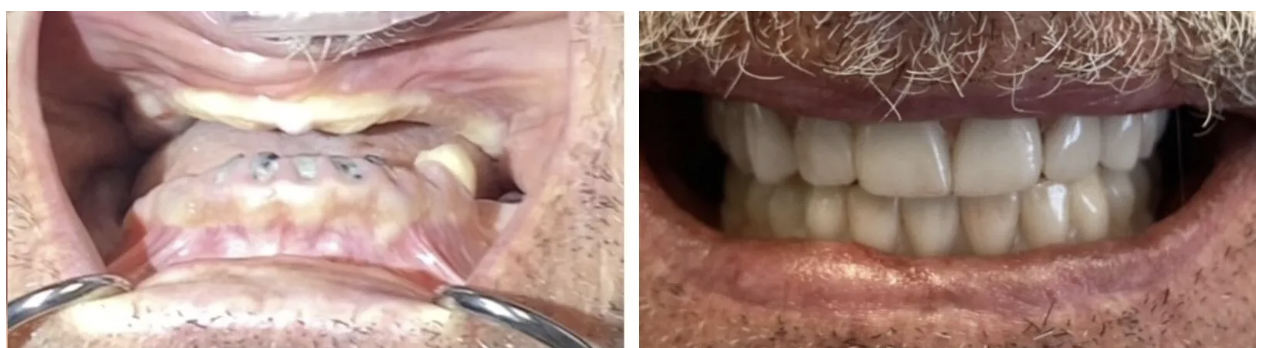
Drag the divider to compare. A selection of patients treated by Dr. Silegy — most involving failing dentition, severe wear, or long-standing tooth loss that had reached the point of needing full reconstruction.

Before and after — Full-arch rehabilitation. Case treated by Dr. Tim Silegy, DDS.
01 / 04

Case type

Full-arch rehabilitation

Treatment performed

Full-arch reconstruction planned from the final restoration backward — staged surgical preparation followed by implant-supported prosthetics.

Outcome

A stable, implant-supported full arch restored function and appearance to a level the patient hadn't had in years.

See more before & after cases

Individual results vary. Images shared with patient authorization and are not a guarantee of outcome. Photographs of actual patients of Dr. Tim Silegy, DDS.

The practice.

A quiet place to think a difficult case through.

The Long Beach office is built around unhurried consultations, modern imaging, and a private surgical suite. Most first visits are longer than patients expect — because the case is what matters, not the schedule.

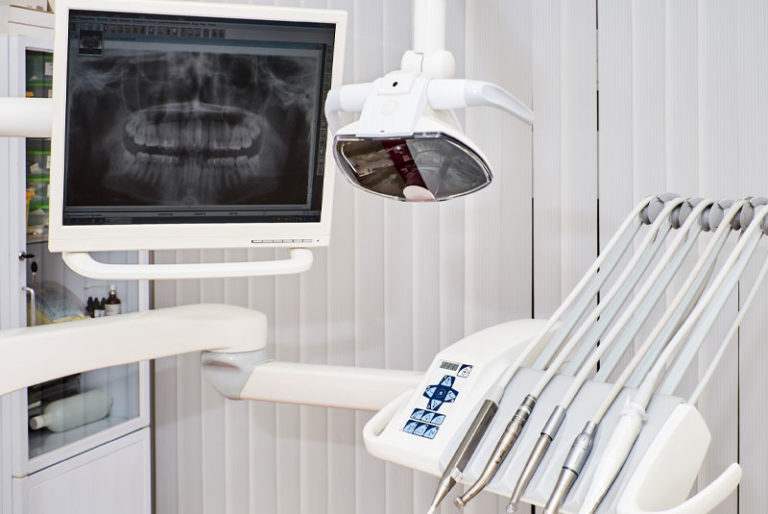
A treatment suite inside Dr. Silegy's Long Beach oral and maxillofacial surgery practice.
The Long Beach surgical suite.

What to expect during your consultation.

The first appointment is a review of the case. Planning starts from the restoration the patient actually needs and works backward to the surgery.

Schedule a review
  1. Imaging

    A 3D cone-beam scan (CBCT) reveals the actual volume and quality of bone, sinus and nerve position, and the state of existing implants — information a 2D radiograph cannot provide.

  2. Clinical examination

    Direct examination of the tissues, remaining teeth, and any existing implants — mobility, probing depths, and signs of infection. Medical history is reviewed alongside.

  3. Existing restorations

    Crowns, bridges, and prostheses already in the mouth are assessed as part of the diagnosis. What looks like an implant problem can be a restorative one — and vice versa.

  4. Bone quality & volume

    Height, width, and density are evaluated against what the planned restoration will require. If the bone is not adequate, reconstruction is planned in stages first.

From first visit to final tooth.

How treatment is sequenced.

Every case is staged. Nothing is rushed, and nothing is placed until the foundation is ready to hold it.

  1. 01

    Consultation

    What has already happened, in your words. Prior imaging and records reviewed.

  2. 02

    3D imaging

    Cone-beam CT shows bone volume, sinus position, and nerve pathways in three dimensions.

  3. 03

    Diagnosis

    The clinical picture, the imaging, and the surgical history read together as one case.

  4. 04

    Treatment planning

    The plan is written from the final restoration backward — surgery serves the outcome, not the other way around.

  5. 05

    Surgery

    Extractions, grafting, sinus lift, or implant placement — staged according to what the tissue can carry.

  6. 06

    Healing

    Bone and soft tissue are given the time they need. Nothing loaded early.

  7. 07

    Final restoration

    The prosthesis is delivered in coordination with the restoring dentist.

Reconstruction options.

Most complex cases are a sequence — rebuild what is missing, then place what the restoration needs. Explore the components.

Bone grafting

Rebuilding lost bone so an implant can actually be placed. Ranges from a localized graft at a single site to block or particulate grafting across a larger area. Healing time is part of the plan, not an inconvenience to be shortened.

Discuss with Dr. Silegy

Typical timeline

3–6 months

Case-dependent, staged.

Complexity

Subject to consultation.

Understanding why implants fail.

Failure is rarely a single event. Select a category to see what tends to sit behind it clinically, and what usually comes next.

Full failure guide

Bone loss

Case share

~32%

Bone around an implant can recede for a number of reasons — chronic inflammation, placement outside adequate volume, or ongoing overload. Once the bone is gone, the implant loses its support. Rebuilding usually requires removing the failing implant, allowing healing, and grafting before a new implant is considered.

Surgery from us. Restoration stays with you.

Dr. Silegy handles the surgical portion of care and coordinates directly with the restoring dentist. Imaging, notes, and staging are shared throughout.

Long Beach, California

Visit the office.

Serving Long Beach and patients throughout Southern California.

6226 East Spring Street
Suite 315
Long Beach, CA 90815

Office hours

Monday
8:30am – 5:00pm
Tuesday
8:30am – 5:00pm
Wednesday
8:30am – 5:00pm
Thursday
8:30am – 5:00pm
Friday
8:30am – 5:00pm
Saturday
Closed
Sunday
Closed

Map data © Google

Dr. Tim Silegy reviewing dental imaging with a patient during a consultation.

You've already heard one opinion. Let's see if there's another path forward.

Bring any recent imaging and a short summary of what's been done so far. Dr. Tim Silegy, DDS will review the case in full before anything is recommended — and will tell you honestly whether there's a path worth taking.